Newly diagnosed

Just diagnosed? Start here

Ketotic hypoglycemia can feel overwhelming at first. You are not alone: more than 1,800 families around the world are part of our community. Here is where to begin.

1,800+ families89 countriesRun by families, for families

A mother and daughter laughing together

In an emergency: if low blood sugar can’t be corrected, or your child becomes less responsive, seek help straight away.

Ketotic hypoglycemia, in short

Ketotic hypoglycemia (KH) means low blood sugar (glucose) together with raised ketones in the body. It typically happens after a period without food, such as sleeping overnight.

KH is not a disease in itself but a sign that can have several underlying causes. When doctors have ruled out the known causes, it is called idiopathic ketotic hypoglycemia (IKH). Many questions about it are still unanswered, which is why families and researchers work on them together.

A diagnosis often brings a lot of new words and worries at once. Take it one step at a time. Your child’s own doctor plans the treatment. This page helps you find reliable information, practical tools and other families who understand.

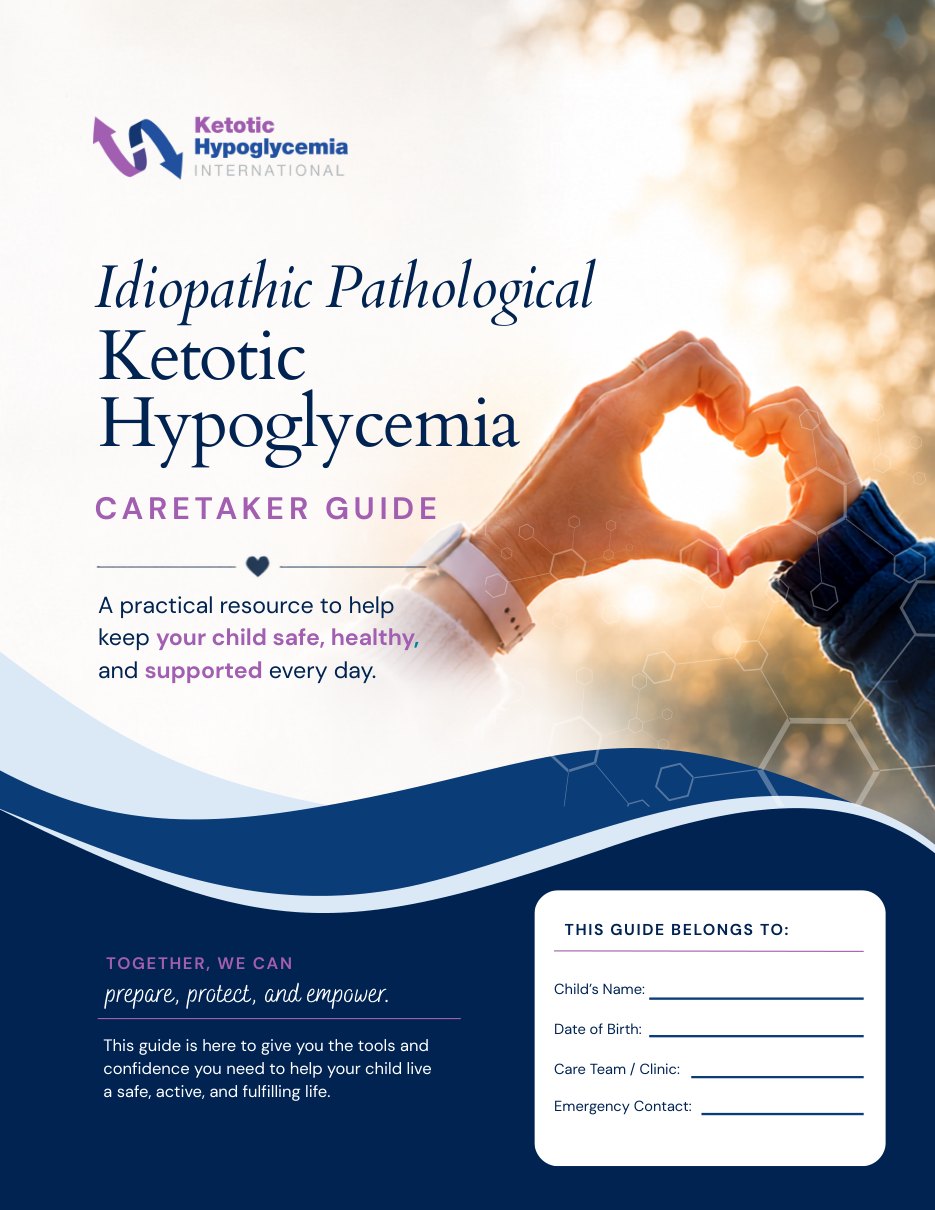
Cover of the KHI Caretaker Guide for idiopathic pathological ketotic hypoglycemia
Free download · PDF, 20 pages

The KHI Caretaker Guide

A practical guide to help keep your child safe, healthy and supported every day. Fill it in with your child’s care plan, emergency letter, medication and contacts, and give a copy to everyone who looks after your child: grandparents, babysitters, daycare and school.

  • Contacts and medical team on one page
  • Your child’s own care plan and emergency protocol
  • Made to be printed and filled in

Always complete and confirm the guide with your child’s medical team.

Your first steps

Six things to do first

Take them one at a time. There is no rush to read everything today.

  1. 1

    Understand the condition

    Start with our plain introduction to ketotic hypoglycemia, then read about the symptoms and signs to look out for.

  2. 2

    Learn the words

    Ketones, BHB, glycogen, fasting test. Our glossary explains the terms you will hear from doctors, in simple language.

  3. 3

    Make a plan with your child’s doctor

    Every child is different, so treatment is always planned with your child’s own doctor. Our articles on diagnosis and management can help you prepare questions.

  4. 4

    Find other families

    Our free Facebook support group connects families from all over the world who share what they have learned.

  5. 5

    Learn from the experts

    Leading doctors and researchers have spoken at our conferences. The talks are free to watch.

  6. 6

    Ask us

    Questions, research ideas, or you just need someone to talk to. Write to us and we will get back to you.

Skip to content